A buyer commission rebate can put thousands of dollars back in your pocket at closing. The natural next question is whether the IRS will want a piece of it. Here is how the IRS has generally treated these rebates, and what to ask your tax professional.
In most cases, a buyer commission rebate on a home purchase is generally not treated as taxable income. The IRS has described similar payments as an adjustment to the price you paid for the home. That means the rebate typically lowers your cost basis instead of showing up as income. This is general information, not tax advice. Confirm how it applies to your purchase with a tax professional.
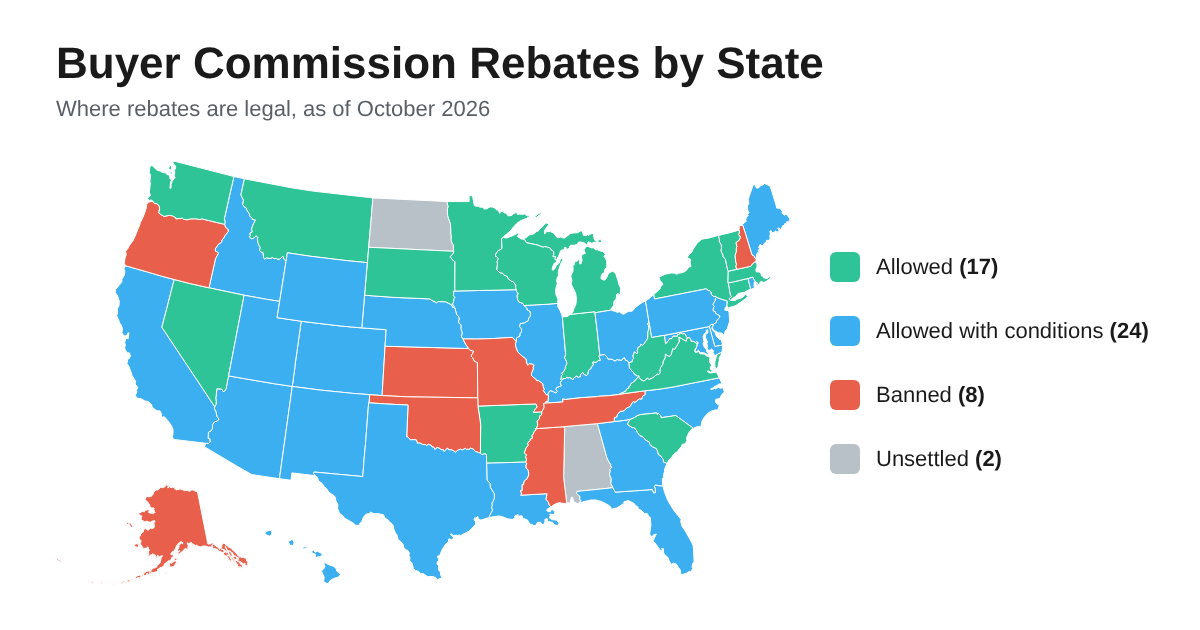
Whether rebates are allowed is a state law question. Our guide to buyer commission rebates by state covers where they are allowed. This post covers the federal tax side.
How the IRS has treated buyer rebates
The key idea is simple. Money that reduces what you paid for something is usually not income. It is a discount.
- Private Letter Ruling 200721013 (2007). A brokerage acting as a buyer’s agent asked the IRS about payments and credits it gave its buyers at closing. The IRS concluded a payment or credit at closing is an adjustment to the purchase price of the home and generally is not includible in the buyer’s gross income.
- Private Letter Ruling 202047002 (2020). A real estate brokerage asked the IRS about cash payments it made to home buyers out of its referral fees. The IRS concluded the payments were purchase price adjustments and were not includible in the buyers’ gross income.
- Revenue Ruling 76-96. The IRS held that rebates an automobile manufacturer paid to retail buyers were not income, but an adjustment to the purchase price of the car.
- Revenue Ruling 2006-27. The IRS treated down payment assistance a home buyer received from a nonprofit as a rebate or adjustment to the purchase price, not gross income.
- IRS Publication 551 (Basis of Assets). Among the items that reduce basis, it lists “rebates treated as adjustments to the sales price.”
Two cautions matter here. First, a private letter ruling applies only to the taxpayer who asked for it, and it cannot be cited as precedent. Second, the facts matter. How your rebate is structured, who pays it, and how you use the property can all change the answer.
Why you usually won’t get a 1099
In both private letter rulings, the IRS said the brokerage had no obligation to issue information returns, such as Forms 1099-MISC, for its payments to buyers, because the payments were not includible in income. That is a big part of why most buyers do not receive one.
That said, practices vary. Some buyers do report receiving a 1099 from an agent or brokerage for a rebate. If that happens, bring it and your closing documents to a tax professional.
What a lower cost basis means
Your cost basis is, in simple terms, what you paid for the home. IRS Publication 551 says basis is usually your cost, and it includes many settlement fees and closing costs from the purchase. When you sell, your taxable gain is generally the sale price minus your adjusted basis and selling costs.
When a rebate is treated as a price reduction, your starting basis goes down by the amount of the rebate. Here is a simple illustration where the rebate shows up as a credit at closing.
| Item | Amount |
|---|---|
| Contract purchase price | $600,000 |
| Rebate (credit from agent at closing) | -$7,500 |
| Starting cost basis (before other adjustments) | $592,500 |
Illustration only. Commissions are negotiable and vary. Actual basis also depends on qualifying closing costs, improvements and other adjustments. Confirm with a tax professional.
So the trade is usually this. You keep the money now, and your basis is a little lower. If you sell later at a large gain, that could mean slightly more gain on paper.
Primary residence vs. investment property
Primary residence. Many homeowners who sell their main home can exclude up to $250,000 of gain, or up to $500,000 for married couples filing jointly, if they meet the IRS ownership and use tests. If your gain falls under that limit, a slightly lower basis from a rebate may make no difference to your taxes when you sell.
Investment or rental property. Basis does more work here. Publication 551 notes that basis is used to figure depreciation. A lower basis from a rebate can mean slightly lower depreciation deductions over time, and the home sale exclusion for a main home generally does not apply to a rental. Talk to a tax professional before you close.
How a rebate differs from referral fees and gifts
The difference usually comes down to who pays you and why.
- A buyer rebate. Paid by your own agent, out of the commission on your purchase, to you as the buyer. That link to the purchase is what supports treating it as a price reduction.
- A referral fee. If someone pays you for sending them a client, that is payment for a service. Referral fees are generally treated as income, and you may receive a 1099 for one. Some states also restrict who can receive a real estate referral fee.
- A cash gift. Money from a parent or relative to help you buy is generally not income to you. It falls under the separate gift rules, and the giver may have a reporting requirement if the gift is large.
How rebates show up at closing
In most states that allow rebates, the rebate is disclosed and appears on the closing or settlement statement. Often it is a credit from your agent that reduces what you owe at the table, rather than a check after closing.
If you are financing, your lender typically has to approve the credit, and there are limits on how it can be used. We cover that in using a buyer rebate with a mortgage. Keep your final settlement statement with your tax records.
Buying in Colorado? Our post on whether commission rebates are legal in Colorado covers the state rules. With EZ Agents, 50% of the buyer’s agent commission comes back to you as a “Credit From Agent” on your settlement statement, with a $7,500 minimum commission on our side. Commissions are negotiable, by law, in every state. Even where rebates are banned, you can still negotiate your agent’s fee.
Buying outside Colorado?
Looking for a rebate agent in your state? Interview agents and ask directly about rebates. You can also reach out to us and we will see if we can help point you in the right direction. Start with our state-by-state rebate guide to check your state first.
State real estate laws and commission rules change, and they are interpreted differently by different regulators. This article is general information, not legal or tax advice, and it may already be out of date. EZ Agents is licensed in Colorado only. Before relying on a rebate in any other state, confirm the current rules with a licensed agent in that state or that state’s real estate commission. Last reviewed November 2026.
Frequently asked questions
Do I have to pay taxes on a real estate commission rebate?
Generally, no. The IRS has treated rebates paid to home buyers as an adjustment to the purchase price rather than income, so a typical buyer rebate is not taxed when you receive it. Instead, it usually lowers your cost basis in the home. Confirm how it applies to you with a tax professional.
Will I get a 1099 for my buyer rebate?
Usually not. In private letter rulings from 2007 and 2020, the IRS said brokerages did not need to issue Forms 1099 for rebate payments to home buyers because they were not income. Some buyers still receive one. If you do, take it and your closing documents to a tax professional.
Does a buyer rebate lower my cost basis?
In most cases, yes. When a rebate is treated as a reduction in the purchase price, your starting basis goes down by the rebate amount. That can slightly increase your gain when you sell, though many primary residence sellers may be able to exclude that gain.
Is a rebate on a rental or investment property treated differently?
It is still generally treated as a price reduction, but the effect can be bigger. A lower basis can mean slightly lower depreciation deductions, and the home sale exclusion for a main home generally does not apply. Talk to a tax professional before closing.
Is a buyer rebate the same as a referral fee?
No. A buyer rebate comes from your own agent’s commission on your purchase and is generally treated as a lower price. A referral fee is payment for sending someone a client and is generally treated as income.
Questions about your rebate?
Buying in Colorado, call Steve to see what your credit at closing could be; outside Colorado, reach out and ask about a referral.
This article is general information only and is not tax, legal or financial advice. Tax treatment depends on your own facts. Consult a qualified tax professional before relying on it.